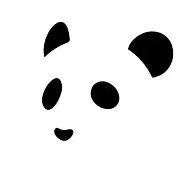

Why is it that when I look at the image below, I can’t not see a sphere in the white space?

It’s because the human brain is wired for completion. We constantly fill in gaps in our perception and understanding, perceiving objects as whole when they are incomplete. The sphere stands out even more than the collection of cones and triangles. Technically, it doesn’t even exist in that image, but the mind refuses not to see it.
Storytellers can use this idea too. You can lead the reader to see a sphere without saying anything about a sphere.
As a developmental editor, I find myself constantly suggesting cuts, and I want to talk about the kinds of omissions I recommend most frequently. Such gaps or “negative space” within a story can invite reader participation such that they become a co-creator in the story. And that’s what we’re going for: engagement and investment.
I want to clarify: this article is not just about cutting excessive description or adverbs or purple prose à la The Elements of Style. This is about tightening the story, not just the writing. Also, this is simply an overview. Each of these elements deserves more in-depth treatment than what I’m giving here.
01 / Action Cutting Action
Sometimes it’s the action itself that can go. This seems obvious, but I still see far too much of what Rust Hills calls “fixed action” scenes and beats — things like mundane body maintenance (eating, showering), transitional locomotion (walking to a car, driving across town), micro-choreography (sitting down, standing up, leaning in), object handling, etc.
Certainly any of the above can work to forward the story. But if the actions reveal nothing about the characters and effect no change, do you really need them?
This is one of the most contentious things I teach, actually; a lot of writers have an impulse to defend their potential excesses. Isn’t mood a valid criterion for including a character’s activity? What if I’m world-building? Or establishing the character’s status quo? What if I just want to add some color or realism to a scene? What if I’m setting something up for later?
Take a look at the following passage, which a writer might attempt to justify as providing mood and texture:
Original
Paul got to the diner early. He slid into a booth by the window and a waitress came over and he ordered coffee. While he waited he looked out at the street. It was one of those November mornings, colorless and damp. A man walked past with his hands in his pockets. Across the street a woman was trying to get her umbrella open but the wind kept catching it. Paul watched her struggle for a moment and then she got it. The waitress came back with his coffee. He put both hands around the mug. When his brother finally came through the door Paul raised a hand so he could see him.
Revised
Paul got to the diner twenty minutes early and chose a booth facing the door. He ordered coffee he didn’t want and put both hands around the mug and watched the street. A woman across the way fought with an umbrella in the wind, lost, and then won. He found himself oddly pleased by this. He would not have said he needed a good omen.
The first one isn’t bad, but the second passage conveys similar mood and texture while also giving more insight into the character. And it does so with just over half the words.
(For more, check out my article on The Problem with “Show, Don’t Tell”)
02 / Information Withholding Information
Everybody knows that withholding information can create mystery and tension. In fact, writers often take this too far by withholding crucial information like orienting facts and important logistics, or obscuring central story elements like character desire or stakes. Those gaps may confuse a reader rather than draw them in. What gaps do engage readers? That’s what I’d like to explore.
Frontloading. The most common error in information handling is probably frontloading — delivering pertinent information up front. While handy for writing a story, it’s not the most engaging situation for readers. If you start with an information dump, you’ll rob the reader of the chance to make guesses and ask questions. The most common advice I give: leave gaps. Cut the backstory entirely or delay it. Only give us backstory once it’s under pressure. Make sure you’ve first made the reader want it. Once it becomes relevant to the POV character’s present-time experience, you can give us some of it, but the key word is restraint. Don’t tell it all.
Unneeded explanation. There are times to completely cut information — specifically, when a writer gives the reader unneeded explanation of what is currently happening. Let’s say your protagonist is a college student who has recently decided to become a vegetarian and has come to her parents’ house for dinner. She walks in and sees a whole roasted chicken on the table. Consider all the cuttable information in the following passage:
Her father, who had been a civil engineer for thirty-two years before his retirement and who always tried to defuse tension at the dinner table with humor, chuckled and said, “You look like you’ve seen a poultrygeist,” in what he meant as a lighthearted tone.
Cut the backstory about his career. Cut the explanation of what he was attempting. Cut what tone he meant. It’s all pretty self-evident.
Think about timing information to the moment when it will do the most emotional work. In the following passage from Megha Mujumdar’s A Guardian and a Thief, Ma and Dadu are leaving Kolkata to emigrate to the United States. Dadu looks fondly upon the city he’s about to leave and says something about corner philosophers who make people laugh:
“You say that,” said Ma, her eyes upon the ground. She had heard his sentiments countless times, and on this day, with departure imminent, she finally spoke a little bit of her mind. “But I think that, maybe, you and I have lived in two different cities.”
In his — jokes, crows, lizards, corner conversations. In hers — men on buses who reached for schoolgirls’ chests. Once, she had been such a schoolgirl.
This brief bit of information about the past is not gratuitous. It is timed to tap into the emotional foundation of Ma’s response.
03 / Motivation Leaving Out Motivation
Motivation — the why behind a character’s behavior and decisions — might be a subset of information, but it warrants special mention. It works in much the same way: it thrives through partial revelations.
There’s a delicious scene in the opening of Karen Joy Fowler’s We Are All Completely Beside Ourselves. The protagonist, Rosemary, witnesses a disruption in a college dining hall. A police officer mistakenly believes she is the troublemaker. He approaches her with a patronizing “let’s stay calm” attitude. She’s holding a plate of food and a glass of milk. The actual troublemaker throws a chair, and while the officer turns to look, Rosemary accidentally drops her plate. He turns back and tells her not to test him. She throws the glass of milk onto the floor anyway.
This opening invites the reader to question why Rosemary would do this when everyone knows she’s innocent. Readers are wired to supply “why” on their own, and that gap invites them into the story as active interpreters rather than passive recipients.
Morgan Talty’s stories in Night of the Living Rez often depict characters who seem to choose self-sabotaging options without any clean explanation of why. Claire Keegan arms us with just enough backstory to take stabs at articulating motivations — but certainly not in a tidy, question-answering way.
Scene-level motivation. Motivation operates at the scene level as much as the story-wide level. Writers sometimes feel they need to explain every action-reaction unit within a scene:
Over-explained
He looked at the door, thinking about escaping the tension in the room, but he sat back down because he didn’t want to seem rude. He picked up the cards to give his shaking hands something to do.
Trusting the reader
He looked at the door, then sat back down and picked up the deck of cards.
Trust the reader to get it — to mentally fill in the gaps you’ve created. Yes, it’s sometimes hard to know whether the reader understands what you intend. But the solution is often to plant better clues rather than insert a full explanation. (For more on motivation, check out my article The Case for Messy Motivation)
04 / Interiority When Less Interiority Is Better
I’m a big proponent of character inner worlds. The main advantage prose storytelling has over video is its ability to get into heads and illuminate the psychology of people outside our experience.
But I see writers take this too far. Rather than rooting the scene in concrete, sensory reality, some writers dig into emotion too much.
Over-stated interiority
Elias looked down at the mahogany casket. I should feel sad, he thought, but I only feel numb. He remembered the last time he’d fought with his brother over the inheritance and realized he still hadn’t forgiven him. He looked at his watch, wanting the service to end so he could finally leave this stifling town and get back to his real life in the city.
Stealthed interiority
Elias looked at the mahogany casket. The wood was polished to a mirror finish, reflecting the gray sky and the huddle of mourners like a distorted television screen. It seemed impossible that something so expensive could be put into the dirt. He checked his own watch — the same gold model his brother had died wanting — and listened to the seconds click away in the dark.
Do you find that first one as tedious as I do? Do you see the lack of energy there?
It’s not that interiority should be avoided, but a) certain types of interiority will force the reader toward gap-filling and empathy, and b) there are certain situations in which interiority is best left out.
In the overstated passage, Elias states his emotions outright (“feel sad,” “feel numb”), tags a lot of his thoughts (“he thought,” “he remembered,” “realized”), and is explicit with his desires (“wanting the service to end”). I’m not prohibiting those varieties of interiority, but in this case, none of the interiority is spurring the reader to make inferences. It’s all spelled out for us.
But see how Elias’s mental state is not spelled out in the revision? It comes through in the way he sees the world, the impressions he has, the analogies, and the snippets of the past. (For more on interiority types, consider my class, A Guide to Interiority.) There’s also much more attention to the sensory world in that revised version, so the reader inhabits the space vicariously.
The more you can put the reader into the character’s situation, the less you may have to tell about how the character feels about it.
When situations are high-tension, emotions are typically obvious. If I detail a pickup truck cutting me off and nearly sending my family into oncoming traffic, I don’t need to tell you how I felt. If I detail the dog attack I endured as a child, I won’t need to mention fear. Back off from interiority when it’s obvious given the external action.
But if the interiority is complex or against expectations, go for it.
The following passage from V. E. Schwab’s Bury Our Bones in the Midnight Soil shows the POV character, Sabine, reckoning with a supernatural bond she’s made with another immortal being:
It’s strange, but ever since her promise, the knowledge skirts her thoughts, as if she cannot look straight at it. When she tries, her mind goes blank. As if the promise not to leave has become a want, and she’s aware that the want does not belong to her, exactly, and yet, she feels it just as keenly. There are cracks, moments of remembering, but they seal up again before Sabine can fit her fingers in, pry open the gaps and reach the thoughts within.
It’s a complex emotion to feel a compulsion masquerading as a natural desire. The passage conveys a latent defiance, but layered beneath imprisonment and longing. It needs to be told to us because it’s complicated; there’s no way to “show” it.
The bottom line: think about what the reader is predicting and either use it (omit or stealth the interiority) or subvert it (give us complexity and contradiction).
05 / Subtext A Word on Subtext
Let’s revisit the optical illusion I started with. You want the reader to see the sphere, but you don’t supply the sphere. You supply things that suggest the sphere. If you leave the right kind of gaps in your writing, the reader won’t experience absence; they’ll experience presence.
Those cones and triangles in the image? They’re the text. The sphere is the subtext. Subtext is so strange: it does and doesn’t exist on the page. It’s not literally there, but it is nonetheless crafted by the writer. The writer puts something on the page to suggest what’s not stated. The reader uses their own cognitive and empathic engagement to fill that gap.
Subtext is not something you omit; it’s something you cause.
06 / Omission vs. Vagueness A Crucial Distinction
A risk of omitting things in stories is that you’ll wind up not with engaging subtext but with confusing vagueness.
Omission is deliberate absence that directs the reader’s attention.
Vagueness is accidental absence that dissolves attention.
When omission is working, the reader forms and revises hypotheses, actively predicts, and trusts the narrator. When writing is vague, the reader cannot form a stable model, stops making predictions, and distrusts the narrator’s authority.
Vague
Dana had been through a lot. There was the thing with her family, which hadn’t gone well, and afterward everything felt different. She tried to deal with it in her own way. Some people wouldn’t understand, but that was fine. She’d learned things about herself.
Omission with contour
The lawyer had mailed the papers back unsigned. Dana had expected that. What she hadn’t expected was the photograph he’d included — no note, just the photograph — and she’d had to sit down on the kitchen floor when she saw it. That was four months ago.
See how the first passage has no edges? Dana experienced something unpleasant and afterward felt different but learned things. Not very illuminating.
The second maintains mystery but gives it contour. We can feel around the shape of what happened, even if we can’t see it clearly.
It’s something to experiment with. Do we need more in the second version? Might we want to clarify whether the legal papers are about divorce or a will?
There’s no “correct” answer here, just as there’s no one right way to draw a sphere, or, say, a panda. But you might end up with a more interesting panda if you leave a few gaps.